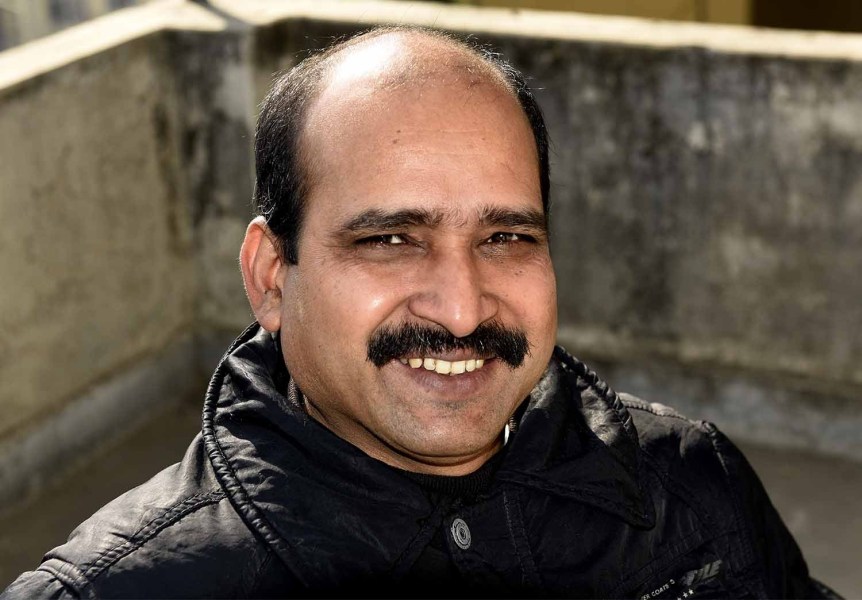
Who is responsible for carnage, Mr. Modi? -Bhim Bhurtel

India wants to be a global rule-maker in the future, however India fails to be a credible South Asian regional rule-maker. India does not abide by the SAARC charter and SAFTA agreement which itself was drafted in through Indian leadership. India also does not abide by the UN charter and the WTO agreement. India will be taken as credible global and regional rule-maker if India abides the agreements that it has signed multilaterally and bilaterally.
Indian Prime Minister Narendra Modi is scheduled to arrive Kathmandu on today shortly for a two-day state visit. It is his third visit to Kathmandu since he assumed the Prime Minister of India in May 2014. This trip is indeed important to Nepali people since no Indian Prime Minister has visited Kathmandu thrice in his/her five years tenure since their own independence. More significantly, it is Mr. Modi’s first visit to Kathmandu since India imposed economic blockade (which is perceived as greater evil than a formally declared war) to Nepal for more than five months. In addition to this, it is also his first visit to Nepal after the backlash of the Doklam standoff between India and China.
The carnage
It was the first Sunday of 2016; my wife had asked me to take her and our son to the Pashupatinath temple. My wife wanted blessings from Lord Shiva to protect our four year old son, an asthma patient, from the extreme cold of January. This innocent request was made in the midst of an outrageous national predicament which was in the dearth of petroleum shortage triggered by the Indian economic blockade after Nepal promulgated the constitution on September 20, 2015.
We had almost given up the hope that we could shield our asthmatic kid from the extreme cold of the winter with no LPG gas and electricity. Our kid was merely surviving with help of Salbutamol and Montelukast Sodium which our pediatrician suggested us to administer, for whole of winter, to protect him from cold. Montelukast Sodium was running out of stock due to high demand. To make matters worse, we couldn’t even provide for warm milk and food due to gas and electricity shortage.
I am an agnostic atheist who has profound qualms of god’s existence; although, I am secular, I conversely honor everyone’s religious faith. Respecting my wife’s faith, I took them both to visit Lord Pasupatinath. We excited the temple from east gate, following their worship and prayer stumbling to the grave scene of the Aayraghat where bodies were being cremated.
When I approached the Aayraghat, a heart rendering scene flabbergasted me at first sight. About thirty dead bodies were in the queue for cremation. The pyres were burning in all eleven cremation spaces of the Ghat. The nearby Electric Cremation also appeared busy since the chimney was full of smoke. On the Ghat there were more than ten, small, dead bodies of children and, three tiny dead bodies of infants clad in white. These bodies were also in queue for the final sleep at Brahmnal and they were being buried at the forest across the temple.
I found myself in the situation similar to a famous Bollywood soundtrack ‘Duniya Me Kinta Gum Hai, Mera Gum Kitna Kam Hai’ (The world is full of agony and my suffering is consequently very less). This doleful panorama broke my heart and I, like any father would, realized that my son’s asthma was my gravest suffering. In the fleeting glimpses of death, I realized that I was lucky enough to have been capable enough in keeping my son alive while there were many ill-fated fathers who couldn’t.
Not having witnessed the Ghat scenes, I truly believed that India’s pressure to Kathmandu was right. Now I realized that the economic blockade was counter-productive and was devastating the lives of the innocent, the helpless and the poor, much more than it ever could harm the ruling class in Kathmandu. It was then; I realized that the Indian blockade turned into a lamentable catalogue of human carnage.
The glimpses at the Aryaghat at Pashupatinath played a precursory role to my reconnaissance in the number of people who had lost their lives due to that blockade. I made a thorough inquiry on the total deaths due to the blockade. I inquired on all the hospitals in Kathmandu Valley, and visited the major cremation centers namely Teku Dobhan, Sovabhagawati, and Sankhamul.
The timeline of my focus was from November 16, 2015 to February 20, 2016. I found that some 2400 people died alone in Kathmandu Valley during this period. The highest number of deceased were from age group of greater than 70 and less than 2 while these children were mostly asthmatic and pneumonic. I was devastated to have found that some 967 children under 5 years and 1,023 over 70 years died due to Pneumonia and asthma at that time.
I was further in despair when I realized that nearly half of individuals who had died due to the virtue of Indian economic blockade did not know what a constitution exactly is and they probably didn’t have anything to do with its promulgation either.
My study concludes that among the deceased, more than 80 percent of aged over 70 years and 90 percent of aged less than 5 years definitely not have died for at least, a few more years if there was supply for fuel and other necessary utilities.
Nepal pays the price for Indian Idiocy
India repeatedly commits preposterous mistakes after mistakes and we Nepal always pays for its idiocy. For example, Bhutan is an India-locked country and Bhutanese refugees entered to Nepal traveling all the way from Indian land in 1990. The Bhutanese refugee’s problem should be the problem of India and Bhutan. However, India sent them to Nepal only in the ground that these Bhutanese refugees spoke Nepali Language. Nepal permitted Bhutanese refugee to enter Nepal on the ground that any of the asylum seekers should not be pushed to a carnage and it runs counter to the Hindu Dharma.
Indian political leaders, bureaucrats, media, academia and civil society should get rid of thinking and stop treating Nepal as Mauja(administrative unit) of New Delhi. India is treating Nepal as its Mauja and the political leaders of Nepal as India’s Patils(Head of Mauja) and bureaucrats as India’s Kulkarnis(Assistant of Patils). India first needs to mindful that Nepal is sovereign and Nepali are master of their own wish.
India plays scholarship provided to Nepali students is a key to interfere Nepal’s internal politics. Indian Embassy in Kathmandu claims that India has contributed greatly by providing the scholarships to Nepali students. More than 85 percent of these students fly overseas after completing their degree. The catch here is that India provides the scholarship to the offspring’s of political leaders, high ranking civil servants and the judicial leaders of Nepal only for them to move to USA, UK, Canada, and Australia.
India imposed an economic blockade on the ground that those people who greatly benefitting from this scholarship scheme and other such financial supports after considering that the ruling class did not follow the Indian directives in the course of constitution drafting process in 2015. Nonetheless, Indian economic blockade hard hit to the ordinary citizens those never get any help from India except in the case of Iodized salt (Aayo Nun).
India needs to be credible
India wants a restructuring of the United Nations and is bidding for the permanent member of the UN Security Council. However, India is meddles in the internal matters of its neighboring countries, bullying us geographically small and economically weak. All this runs counter to the spirit of UN charter.
Besides, India wants to be a global rule-maker in the future, however India fails to be a credible South Asian regional rule-maker. India does not abide by the SAARC charter and SAFTA agreement which itself was drafted in through Indian leadership. India also does not abide by the UN charter and the WTO agreement. India will be taken as credible global and regional rule-maker if India abides the agreements that it has signed multilaterally and bilaterally.
Indian media, civil society, and the academia think nationally but not rationally. India should be mindful, as much as Indians love their country, Nepali citizens have as much inalienable right to love to their own country. Similarly, as much as Indian people are nationalists, Nepali citizens have rights to be as much nationalist. No Nepali wants to be poor, back-warded and suffering from the status quo to serve the Indian interest.
Indian political leaders, bureaucrats, media, academia and civil society should get rid of thinking and stop treating Nepal as Mauja(administrative unit) of New Delhi. India is treating Nepal as its Mauja and the political leaders of Nepal as India’s Patils(Head of Mauja) and bureaucrats as India’s Kulkarnis(Assistant of Patils). India first needs to mindful that Nepal is sovereign and Nepali are master of their own wish.
India’s Permanent Economic Blockade
India has been imposing a permanent economic blockade to Nepal and it is the main hindrance to the sustainable economic growth of Nepal. India has imposed this permanent sanctions more than 50 times since Nepal and India signed the new trade and transit treaty in 1996. Due to this permanent economic blocked, Nepal has signed trade and transit treaty with China as the measure of the last resort. Nepal itself is not tilting toward China however India is pushing Nepal toward China. Indian foreign policy regime should be mindful that no country apt to fulfill Indian interest being itself economically poor, weak and backward.
Indian goods enter Nepal easily while Nepali goods face many obstacles while entering Indian markets resulting in a colossal trade imbalance between Nepal and India. Therefore, Nepali citizens expect Mr. Modi to take generous and bold steps to reduce the trade imbalance by providing unilateral concessions to Nepali goods in India as much as China is providing. China has been providing unilateral concessions of zero custom duty for nearly 4800 Nepali goods.
India says that India and Nepal have an intimate relationship of Roti(Bread) and Beti(Daughter). If so, how and why boarder comes to the goods entering to India from the Bahu’s Maike(Daughter-in-law’s parents) and Beti’s Sasural(Daughter’s in-law’s house)? Why there is custom? Why there is tariff? Why there are quarantine check posts? Why you need a sanitary and phytosanitary standards (SPS) of Nepali agriculture products?
South Asia Watch on Trade, Economics, and Environment (Sawtee) has carried out a study few years before and the study found that para-tariffs such as countervailing duty, special additional duty, and their non-transparent applications have been creating a permanent economic blockade to Nepali exports to India. The study also advised that the quarantine is another key non-tariff barriers that play a crucial role to maintain the economic blockade for Nepali goods. The SPS and technical barriers to trade (TBT) make up 80-85 percent of the non-tariff barriers to Nepali exports. Due to this, Nepal’s trade deficit is reaching 1000 billion of local currency and two third is with only India in the current fiscal year.
Intelligence dominated Neighborhood Policy
Indian Foreign Service and Indian Intelligence service have been found providing false information about Nepal to the Ministry of External Affairs and the Prime Minister’s Office of India. The Indian economic blockade in 2015 was the result of such false reporting from Indian Embassy in Kathmandu.
We all know how a Nepali national (Terai born) working for a well-known Indian media reported that if they halt petroleum for 15 days, Kathmandu can be easily kneeled down to their whims. It was India’s blunder to trust the puerile advice of such journalist.
Now, Nepali people think that the best India can do for Nepal is if it doesn’t do anything to Nepal. Nepal needs none of the supposed Indian help except it can help Nepal not meddling its political affairs and leave Nepal to manage itself in its affairs. That brings stability and open the avenue for economic development. An ordinary Nepali only wants this much from India.
‘Atithi Devo Bhava’ (a guest is the god) is a Nepali tradition. Mr. Modi is our Prime Minister’s distinguished invitee to arrive Kathmandu in advance slated. So it is national duty to welcome Mr. Modi in our land. Those who lost their beloved ones due to economic blockade of India that I went on to study now ask to Mr. Modi, “Hum se kya bhool huwa jisko saja humko mila?” (What crime did we commit that we lost our beloved life? Being asthmatic and pneumonic are the crime we committed so we lost our lives?).